Blog Category: All, Buying an RV
RV TIPS & TRICKS
The Top 23 FAQ’s About RVs
The Top 23 FAQ’s About RVs
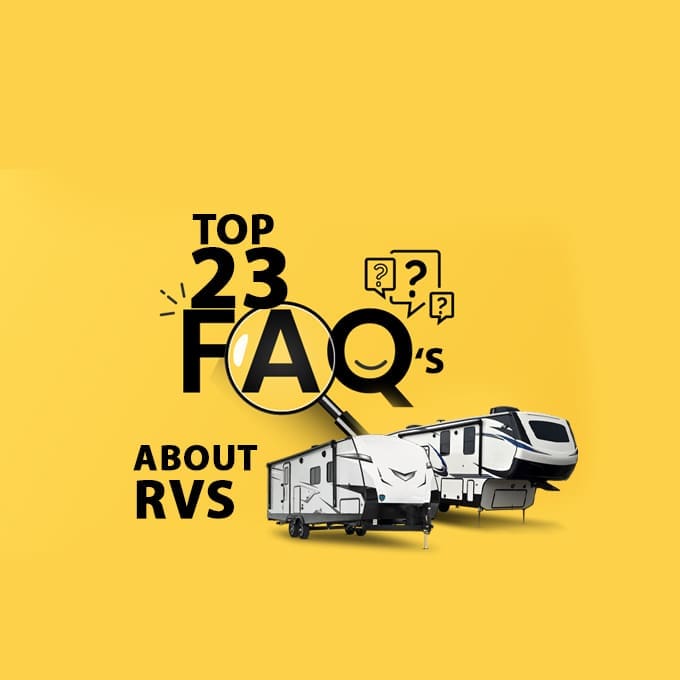
If you’re new to the world of RV’s, the number of questions can be overwhelming. Here are the twenty-three we get asked most.
1. What do the initials RV stand for?
RV is an abbreviation for recreational vehicle — a mobile dwelling unit for camping and travel.
2. There are many kinds of RVs. What is the most popular choice of RV in Canada?
The travel trailer is by far the most popular class of RV in Canada and, in fact, all of North America. They offer good value, they can be towed by a range of vehicles, they come in many sizes, and once you are set up you still have your vehicle. See our guide to the classes.
3. How much can an RV cost in Canada?
RVs in Canada can range from around $15,000 to upwards of $300,000 and more for luxury models, depending on type, size and features.
4. What about the cost of ownership? How much can operating an RV cost per month?
Monthly costs, including loans, fuel, maintenance and campground fees, can range from $500 to $2,000, depending on how you use it and where you go.
5. What percentage of Canadians own an RV?
Approximately 15% of Canadian households own an RV.
6. How much does it cost to camp in an RV in Canada?
The cost to park your rig at a campsite can vary by location and available amenities, but the average is around $40 to $60 per night. Premium locations charge more.
7. What qualifies as an RV in Canada?
An RV is a motorized or towable mobile dwelling — that covers trailers, motorhomes and self-propelled units.
8. What is the purpose of a travel trailer?
Travel trailers provide a mobile living space for camping, travel, or even full-time living, and unfettered exploration of Canada’s wild open spaces.
9. What is another name for a travel trailer?
A travel trailer is also referred to as a caravan.
10. Do RVs require a lot of maintenance?
Like any home or dwelling, RVs require regular maintenance — but a lot? Preventive care protects the investment: check the roof, the plumbing, the caulking and the batteries. See also How To Winterize your RV and The Spring Cleaning Products You Need For Your RV.
11. What are the regulations for owning and operating an RV in Canada?
Rules vary, but include vehicle registration, licensing, and adherence to local bylaws for parking and living.
12. Do you need a special license to tow a trailer in Canada?
The short answer is no, you do not need a special driver’s license to tow a trailer in most cases. Trailers over provincial weight limits (often 4,600 kg combined) may need an endorsement or a higher class of licence; Quebec requires an F endorsement above 4,500 kg.
13. Can I drive an RV in Canada?
Yes, most RVs can be driven with a standard driver’s license, but larger ones may require additional qualifications.
14. Can you live full-time in an RV in Canada?
Yes, but you’ll need to do research on local zoning laws, plus prepare for the seasons.
15. Can you live in a travel trailer in the winter in Canada?
Yes, but it requires proper insulation, heating and winterization to handle harsh winters.
16. What can I leave in my trailer over the winter?
Remove perishables, electronics and liquids that can freeze, and secure all items against pests.
17. How do I winterize my RV for winter living in Canada?
Insulate the RV, add skirting, heat the water lines, and use a reliable heating system.
18. Do travel trailers need to be covered in the winter?
Covering helps protect the roof, seals and exterior from snow and ice damage — see Protect Your RV Year-Round with a Quality Cover.
19. How long can a trailer be in Canada?
Trailers can vary in length but typically range up to 46 feet, depending on provincial regulations.
20. Can I take my RV to the USA?
Yes, Canadians can take their RVs to the USA for travel, subject to border regulations.
21. Can a Canadian buy a trailer in the US?
Yes, but it will need to meet Canadian safety standards before import.
22. Can I import a travel trailer from the USA to Canada?
Yes, but you’ll need to follow import regulations, including inspections and duty payments.
23. Are double trailers legal in Canada?
Double towing is legal in some Canadian provinces but comes with restrictions on length, weight and hitch types. Rules vary by province, so checking local regulations is essential.
Ready to start the journey?
We have lots of other resources to get you started on your path to purchase!